University of Dubuque to Expand Rotor-Wing Training with New entrol Simulator
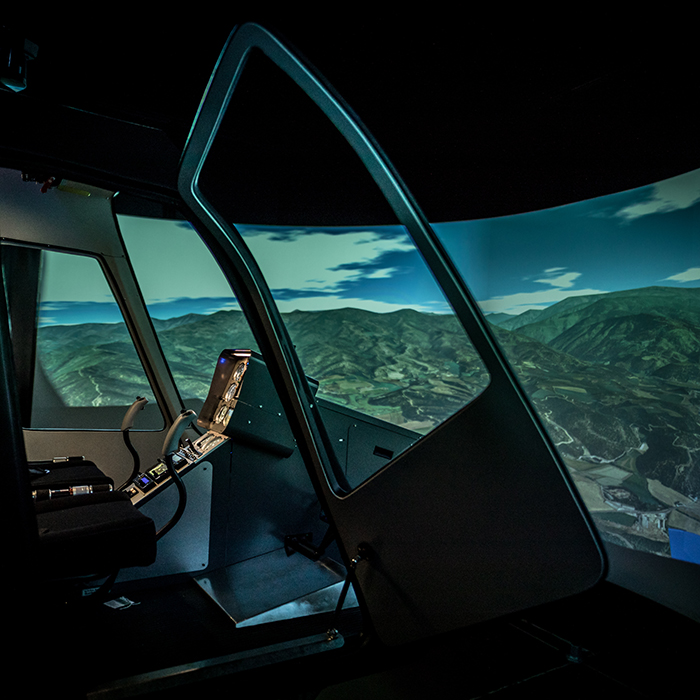
DUBUQUE, Iowa - The University of Dubuque's rotor-wing training will soon include a state-of-the-art Cabri G2 AATD simulator from entrol, one of the manufacturer leaders of certified simulators worldwide located in Madrid, Spain.
The agreement marks a significant step in entrol's expansion within the North American collegiate aviation sector. The device is scheduled for installation in 2027 to support the ongoing growth of UD's rotor-wing program.
The simulator's flight deck is built as an exact replica of the Guimbal Cabri G2, the primary training helicopter operated by UD. This aircraft-specific layout provides students with direct continuity between classroom theory, simulator practice, and actual flight operations.
The physical immersion is supported by a standard cylindrical visual projection system with three projectors and a database containing 10 key US airports. Tactile feedback is enhanced through an integrated vibration system, while a remote Instructor Operator Station (IOS) allows flight instructors to easily modify weather conditions, introduce system failures, pause scenarios, and repeat maneuvers.
"We wanted a simulator that closely matched the aircraft our students actually fly. entrol's Guimbal G2 simulator offered the aircraft-specific environment and training capabilities we were looking for," said Evan Lawler (C'20), chief flight instructor - helicopter at UD. "It will allow our students to practice procedures and challenging scenarios in a controlled environment before encountering them in the aircraft, giving them more repetition while improving safety, confidence, and decision-making."
The Cabri G2 AATD will be integrated throughout multiple phases of UD's rotor-wing curriculum, spanning private pilot, instrument, and commercial training, as well as certified flight instructor courses.
Key training applications include:
- Instrument and Emergency Procedures: Allowing pilots to practice high-risk scenarios, system failures, and adverse weather conditions that are difficult or unsafe to fully demonstrate in the real aircraft.
- Scenario-Based Training and Crew Resource Management: Incorporating real-world operational scenarios and Crew Resource Management to develop situational awareness and decision-making skills.
- Standardization and Continuous Progress: Enabling ongoing student progression when weather or aircraft availability limits flying, while serving as a tool for instructor training and standardization.
Related News
All News